As a group, we study how biomacromolecules (including RNA, DNA, and proteins) take shape, move, interact, and carry out biological functions. We combine experimental approaches, synthetic biology, computational modeling, and artificial intelligence to turn complex molecular behavior into clear and predictive understanding.
These approaches help us uncover the physical principles that govern biomolecular structure and function and guide the design of functional biomolecules and nucleic-acid-based therapeutics. Our research connects fundamental biophysics with broader applications in biology, medicine, and biomolecular engineering.
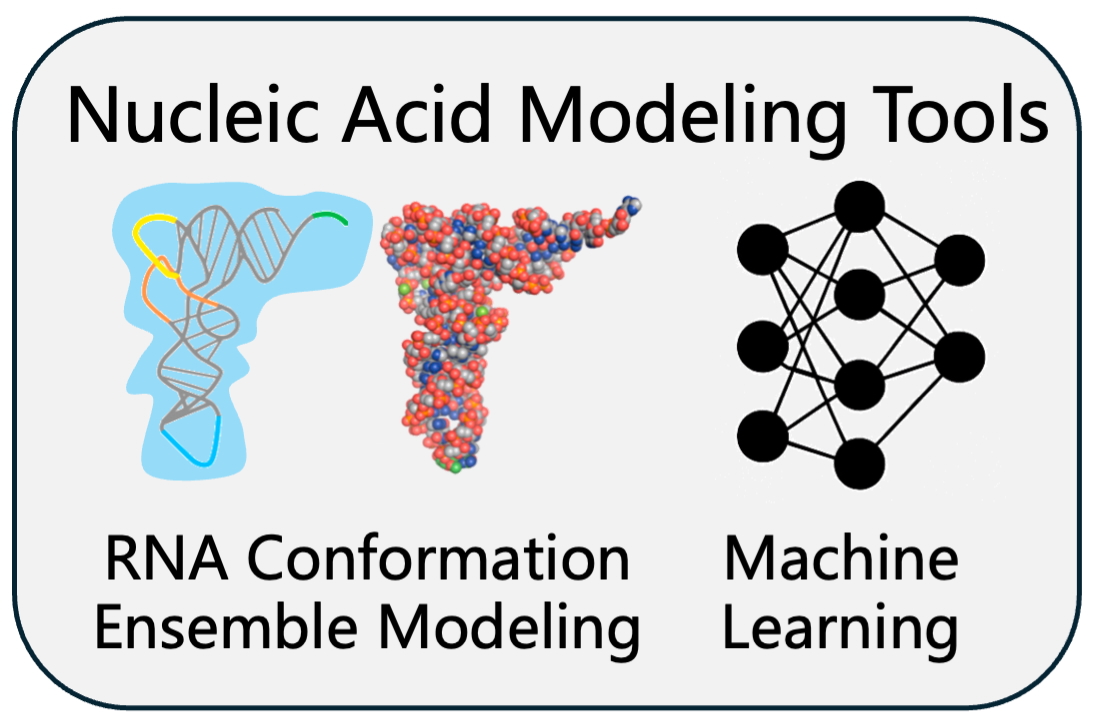
Nucleic Acid Modeling Tools
We develop computational tools that combine experimental data with molecular simulations and artificial intelligence.
These tools help us describe the structures and motions of flexible RNA and DNA in realistic environments and build molecular models that are accurate, interpretable, and useful to other researchers.
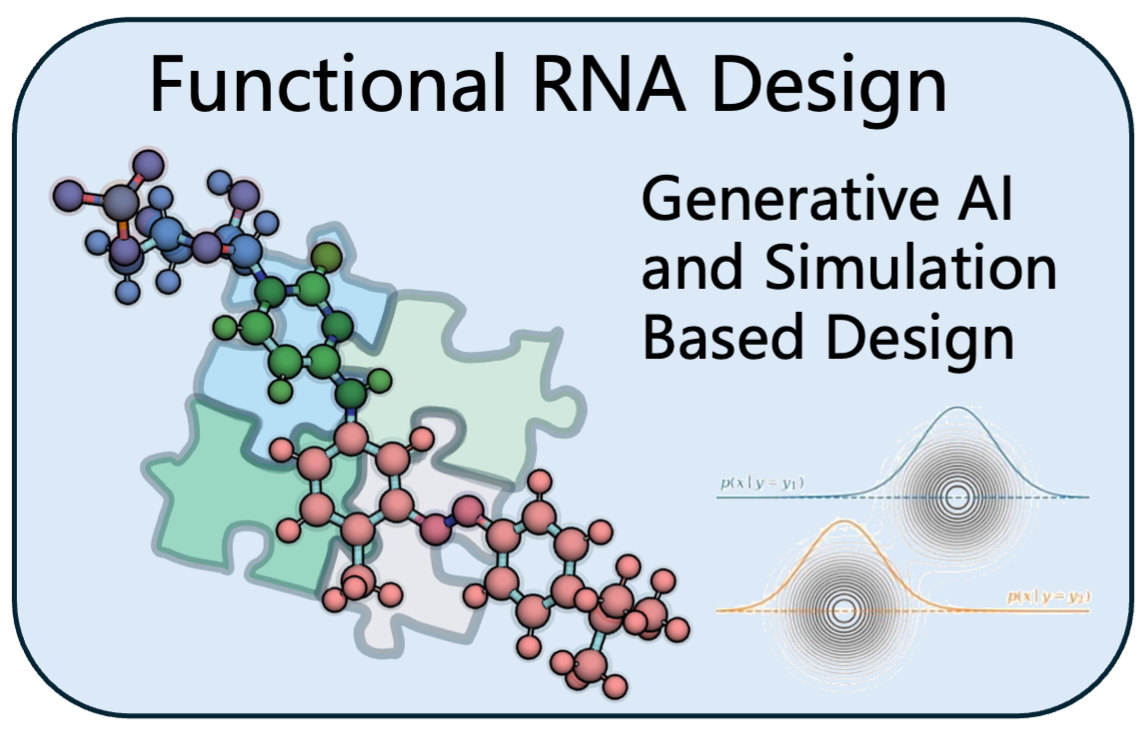
Functional RNA Design and Engineering
We study how RNA sequence, structure, chemical modification, and molecular environment work together to control biological function.
By combining molecular simulation, artificial intelligence, and experimental validation, we aim to design RNA molecules and modifications with predictable properties for biotechnology and therapeutic applications.
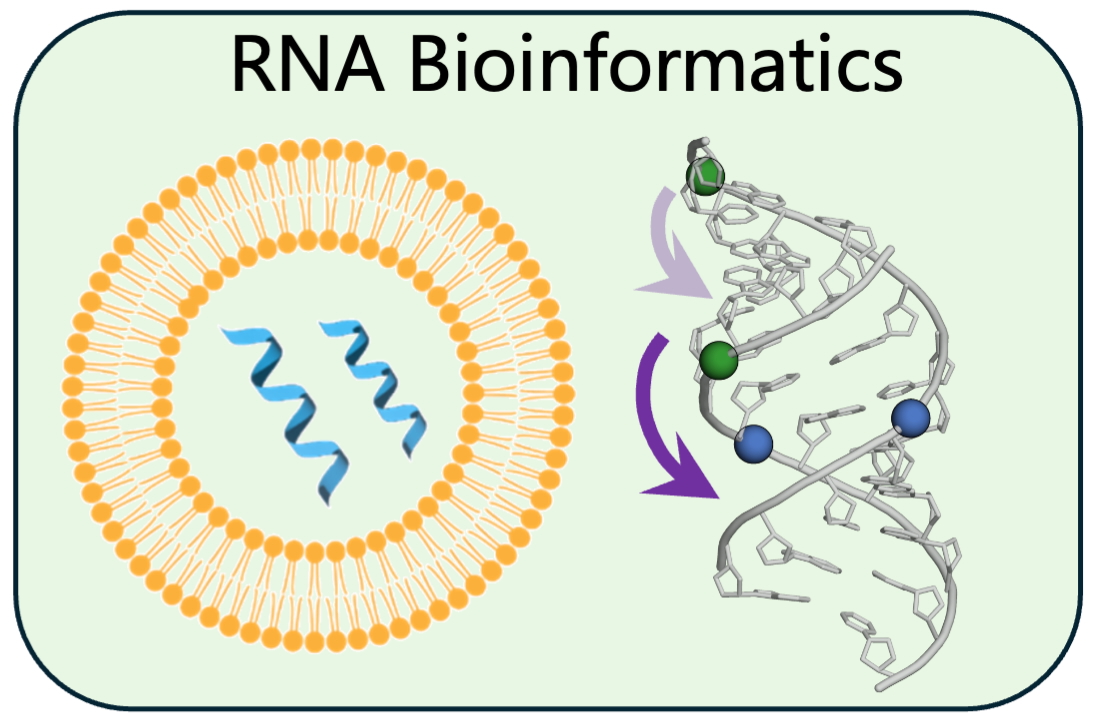
RNA Bioinformatics
We develop bioinformatics and AI methods to predict RNA structure from sequence and connect structural information with genomic data.
At larger scales, we seek to discover functional RNA elements, understand how sequence variation changes RNA structure and function, and identify patterns that can guide experiments and biomedical research.